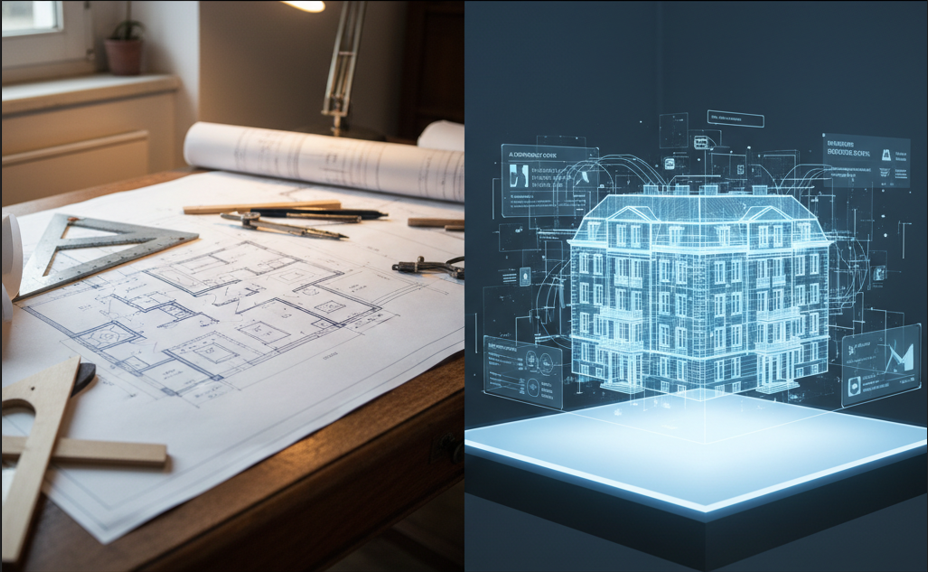
Blueprints to Algorithms
From Blueprints to Algorithms: How Technology Is Redesigning Real Estate The real estate industry is witnessing a fundamental shift—from traditional, manual planning methods to intelligent, technology-driven design and execution. What once relied heavily on paper blueprints, intuition, and experience is now increasingly powered by algorithms, data, and artificial intelligence. This transformation is redefining how real estate projects are conceived, designed, and delivered. AI-Based Floor Planning and Space Optimization Artificial intelligence is revolutionizing the way spaces are designed. AI-powered tools analyze factors such as usability, natural light, airflow, and occupant behavior to create optimized floor plans. These intelligent systems help architects and developers maximize space efficiency while enhancing comfort and functionality. By simulating multiple design options within minutes, AI enables better decision-making at early stages—reducing design errors and minimizing the need for costly revisions later. The result is smarter layouts that align with modern living and working requirements. Digital Twins and 3D Modeling Digital twin technology allows developers to create a virtual replica of a building before it is constructed. Through advanced 3D modeling, every element of a project—structure, materials, systems, and operations—can be visualized, tested, and refined in a digital environment. This technology enables stakeholders to identify design flaws, assess performance, and simulate real-world conditions in advance. Digital twins not only improve planning accuracy but also support long-term asset management by providing real-time insights throughout a building’s lifecycle. Smart Construction Planning Technology-driven construction planning is transforming on-site execution. AI and data analytics help forecast timelines, allocate resources efficiently, and monitor progress in real time. Predictive analytics can anticipate potential delays, safety risks, or material shortages—allowing corrective actions before problems escalate. Smart planning tools enhance coordination between architects, engineers, contractors, and developers, ensuring smoother workflows and better control over complex projects. Reducing Cost Overruns and Project Delays One of the most significant benefits of intelligent design and planning is the reduction of cost overruns and delays. By identifying risks early, optimizing workflows, and improving accuracy, technology minimizes unexpected expenses and schedule disruptions. Data-driven insights enable developers to maintain budget discipline while delivering projects on time. This not only improves profitability but also strengthens trust among investors, buyers, and industry partners. Conclusion: Designing the Future with Intelligence The transition from blueprints to algorithms represents more than a technological upgrade—it marks a new way of thinking about real estate development. By embracing AI, digital modeling, and smart planning, the industry is moving toward greater efficiency, transparency, and sustainability. As technology continues to evolve, real estate professionals who adapt to intelligent design tools will lead the future—building smarter spaces that meet the demands of a rapidly changing world.